
Protecting Your Claim in the First 24 Hours
The first day after property damage shapes the whole claim. A checklist for what to do, in order, and the few mistakes that are hard to undo.
In the first 24 hours after property damage, focus on five things in this order: get everyone safe, stop the damage from spreading, photograph everything before it's moved, report the loss to your carrier, and save every receipt and damaged item. Policies generally expect you to take reasonable steps to prevent further damage, and the records you create on day one are the records your adjuster relies on later.
The first 24 hours, in order
Exact timing varies. The order is what matters.
- Get safeLeave if there's fire, gas odor, sagging ceilings, or standing water near electrical outlets or panels.
- Stop the sourceShut off the water main or the fixture valve. For fire or storm damage, secure openings once it's safe.
- Photograph everythingWide shots of every room, then close-ups. Video walk-throughs help too.
- Report the lossCall your carrier or agent. Write down the claim number and who you talked to.
- Start mitigationProfessional extraction, drying, board-up, or tarping to stop further damage.
- Save and logKeep receipts, damaged items, and the failed part. Start a claim journal.
1. Safety first, always
No claim is worth an injury. Don't walk into standing water if outlets, cords, or the electrical panel may be wet. If you smell gas, leave and call the gas utility or 911 from outside. After a fire, don't re-enter until the fire department says it's safe. A sagging ceiling may be holding water and can come down without warning.
2. Stop the damage from getting worse
Most homeowners policies include a duty to protect the property from further damage. In practice, that means taking reasonable, prompt steps:
- Shut off the main water valve, or the valve to the failed fixture.
- Turn off electricity to affected areas if you can do so safely from a dry location.
- Move undamaged belongings out of harm's way.
- Arrange board-up or tarping for openings after fire or storm damage.
- Call a mitigation company to begin extraction and drying.
Keep receipts for anything you buy or pay for: tarps, fans, a plumber's emergency visit, a hotel night. These are commonly reimbursable under the claim.
3. Photograph before you move anything
Your photos are your best evidence of what the damage looked like before cleanup. Take wide shots of each room from the doorway, then close-ups of damaged materials, the water line on walls, ceilings, flooring, and contents. Photograph the source: the burst pipe, the failed hose, the roof opening. Video walk-throughs with narration are helpful. Don't delete anything, even blurry shots.
4. Report the loss
Call your carrier's claims line or your agent. You don't need every answer yet. Report what happened, when you discovered it, and what you're doing to stop it. Write down the claim number, the date and time of the call, and the name of the person you spoke with. Ask whether the carrier has any requirements for emergency work.
5. Don't throw things away yet
It's natural to want soaked carpet and ruined furniture out of the house. But damaged items are evidence. Photograph them, list them, and keep them, or at least keep a sample, until your adjuster has seen them or tells you they can go. If something must be removed for safety or sanitation, as with sewage-contaminated materials, photograph and document it thoroughly first.
Mistakes that are hard to undo
Do
- Keep the failed part (supply line, valve, fitting)
- Keep a dated claim journal of every call and visit
- Read any work authorization before you sign it, and ask questions
- Keep receipts for living expenses if you can't stay home
Avoid
- Starting permanent repairs before the damage is documented
- Throwing out damaged items before they're photographed and listed
- Waiting days to report, or letting water sit
- Using a household vacuum on standing water
If you can't stay in your home
Many homeowners policies include coverage for additional living expenses (sometimes called "loss of use") if a covered loss makes the home unlivable. Ask your carrier about it in your first call, and keep receipts for lodging, meals beyond your normal costs, and other added expenses.
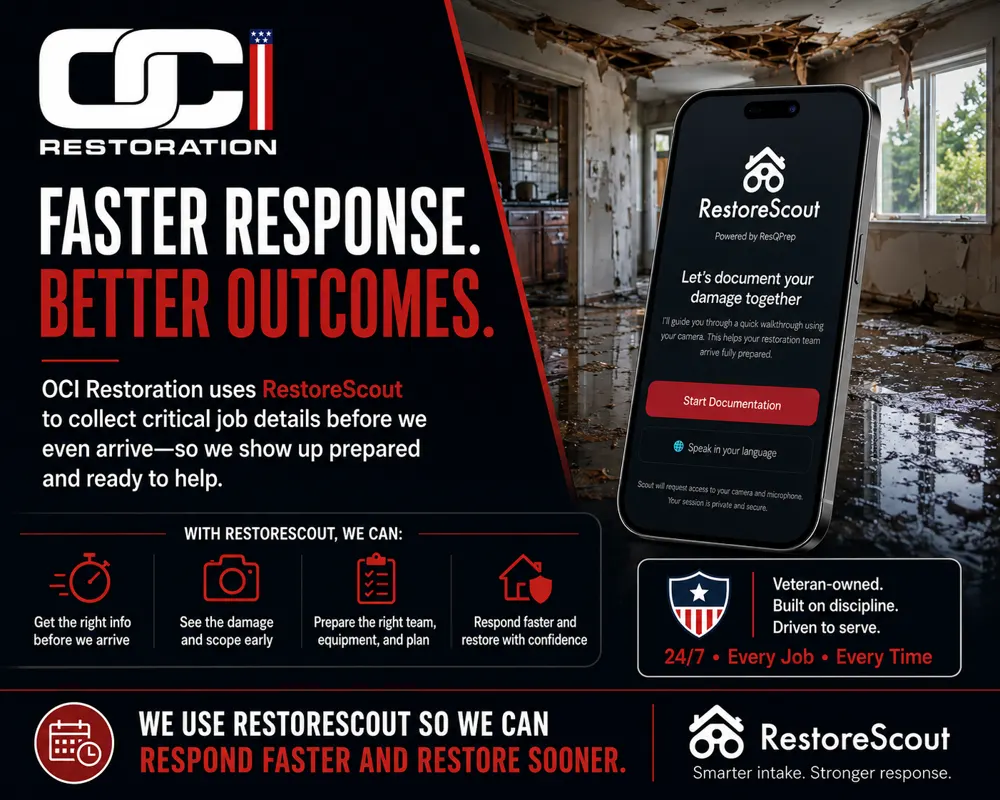
Document the damage before we arrive.
RestoreScout is built for the first hour. It guides you through photographing each room and describing the damage from your phone, and it timestamps everything so your record starts the moment you do.
What you capture goes straight to our team, so the crew arrives already knowing the scope, the access, and what equipment to bring — and your insurance file starts building from the first photo instead of the first visit.
- Takes a few minutes, whenever you're ready
- Nothing to download — it runs in your browser
- Available in your language
- Your session is private
Scout will ask for access to your camera and microphone. If you'd rather not use it, calling gets a team moving just as fast.
Frequently asked questions
Don't see your question? Call us anytime — real people, 24/7.
Should I call my insurance company or a restoration company first?
If water is actively spreading or the home is open to weather, call to stop the damage and report the loss to your carrier as soon as you can, ideally the same day. Both calls matter, and neither needs to wait for the other.
Do I have to wait for the adjuster before cleaning up?
Generally no. Policies typically expect prompt steps to prevent further damage. Photograph everything first, keep receipts, and tell your carrier that emergency mitigation has started. Hold off on permanent repairs until the damage is documented.
Can I throw away wet carpet and furniture?
Photograph and list them first, and check with your adjuster before disposing of them. If items must go right away for safety or sanitation, document them thoroughly and keep a sample if you can.
What if the damage happens at night or on a weekend?
Stop the source, get safe, take photos, and report the loss through your carrier's claims line, which is often available around the clock. OCI Restoration answers emergency calls 24/7.
Will my insurance pay for a hotel?
Many homeowners policies include additional living expenses if a covered loss makes your home unlivable. Ask your carrier early, and keep every receipt.
Related claim guides and services
Sources
It just happened? Call us now.
24/7 emergency mitigation and full restoration across the Triangle from our Raleigh office.
Important: OCI Restoration is a licensed restoration contractor, not a public adjuster, insurance agent, or insurance advisor. This page is general information about how property claims commonly work in North Carolina. Your policy language and your insurance carrier determine coverage. For questions about your specific policy, talk to your agent, your carrier, or a licensed public adjuster or attorney. The N.C. Department of Insurance Consumer Services Division can be reached at 855-408-1212.